A Manifesto for Urgent and Unified Education Reform in the Philippines
The illusion persists because we’ve confused visibility with reality. Yes, we see English speakers in BGC. We hear fluent graduates from prestigious schools in Manila.
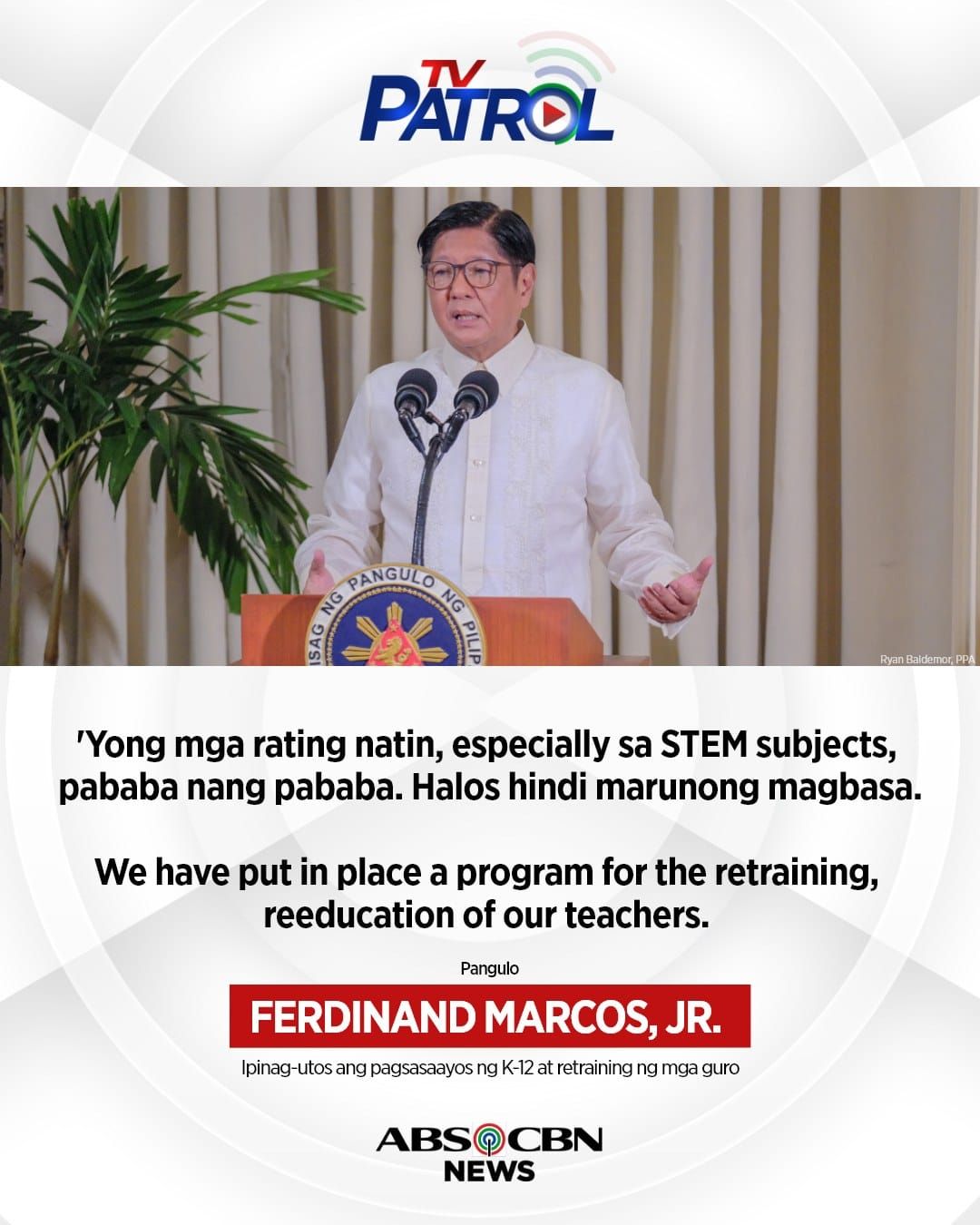
This news shocked the nation, but not me.
For years, Filipinos have carried a deeply ingrained belief: we are globally competitive. We say it with pride — that we are the most literate Asian nation, that we speak English fluently, that our workers are in high demand across the world. It's echoed in ads, tourism campaigns, and casual conversations. It has become part of our identity.
But what if it’s no longer true — or never fully was?
The illusion persists because we’ve confused visibility with reality. Yes, we see English speakers in BGC. We hear fluent graduates from prestigious schools in Manila. We watch well-spoken influencers on TikTok and YouTube. But this narrow slice of the population has been mistaken for the majority — when in truth, it represents a privileged minority.
We mistook survival for excellence. Many Filipinos speak English just enough to survive abroad — and that became a source of pride. But speaking enough to work doesn’t mean you’re thriving intellectually in that language. Communication is not the same as comprehension, analysis, or confidence.
Our National Pride was never checked by Data with Updated Literacy Standards, up until now.
A quick ChatGpt search:
- Nearly 19 million Filipinos aged 10–64 are functionally illiterate by the PSA’s 2024 standards.
- Among those who completed junior or senior high school, ≈ 5.6 million graduates (21%) still can’t grasp a basic story despite holding diplomas.
- In effect, 1 in 5 high school graduates in 2024 left school without functional reading comprehension, highlighting a deep problem in educational quality.
We built our national pride on old narratives: that we had the best English in Asia, that we excelled overseas. But we never paused to ask: Which Filipinos? With what access? With what level of understanding?
We celebrated the success of the few and ignored the quiet struggles of the many.
Real global competitiveness doesn’t come from a polished accent or a tourist-friendly smile. It comes from deep literacy, critical thinking, emotional intelligence, and agency.
And until we fix the foundations — the schools, the reading comprehension, the reflective thinking — we will keep exporting resilience, not excellence.
This isn’t to shame us. It’s to awaken us.
Because we can’t fix what we’re still pretending isn’t broken.
So why is our statistics like this, and how do we solve it?
No societal issue has always been one-dimensional. Teachers, students, parents and governments have their own perspectives - each with complaints, each quick to blame. We only will start to fix things if we pause and see how intertwined everything really is.
- MTB-MLE (Mother Tongue-Based Multilingual Education)
This policy mandates that From Kindergarten to Grade 3, the language of instruction should be the child’s first language or “mother tongue”.
Essentially, this
- Help children learn faster and better by using the language they already understand.
- Build reading, comprehension, and thinking skills in the most familiar language.
- Smoothly transition to learning Filipino and English (L2 and L3) starting in Grade 4.
The issues with this are:
- There's lack of teacher training and resources in every vernacular.
- There's no solid transition from MTB to English/Filipino - major gaps and abrupt change.
- It's supposed to boost learning by using a language that students first understand, but the execution does the opposite - when teachers default to academic or deep "lalum" forms of the vernacular that don’t match how kids actually speak.
- It's supposed to build comprehension and thinking skills, but why is it designed for Grade 1-3? We used it at the wrong depth, stopped it at the wrong time and failed to connect it meaningfully to the bigger picture of literacy, fluency and thinking.
But how can we improve this model? We should:
- Develop contextualized word banks and spoken usage guidelines, so instruction mirrors real-life conversational language.
- Introduce parallel vocabulary mapping by Grade 2:
- Develop “bridging modules” that slowly reduce mother tongue usage while increasing English/Fili complexity through:
- Mixed-language stories
- Progressive vocabulary swap-outs
- Scaffolded writing exercises (e.g. start paragraph in Bisaya, finish in Filipino)
But I want to bring these points:
Why the need to do all those unnecessary upgrading when we can eliminate this model that is inconsistent and creates more confusion. We can continue to have our curriculum English/Filipino from Kindergarten, aided with vernacular explanation while mapping parallel vocabulary - like how many Grade 4+ teachers are doing anyways. We need fluid adaptation of our multilingualism.
This way cognitive load is reduced, faster transition to functional literacy and aligns to real world.
Stop upgrading for the sake of upgrade.
And while DepEd has started to roll it back through the Matatag curriculum, we say:
Do it faster. Don’t wait years. End the confusion now.
And when rollback does happen:
- “What training and timeline is in place for teachers transitioning to full Filipino/English?”
- "How's training going to look like?"
- “How will we measure the rollback's impact on reading and literacy rates?”
- "What intentional support will DepEd offer? and teachers, what intentional support do you need to accelerate this?"
- Core Skills are Treated Like Electives
Critical thinking, reading, comprehension, and writing are boxed into isolated subjects instead of being the backbone of all learning. Sends students the message that:
“You only need to think clearly during this hour.”
Thinking is not a subject, not electives, not afterthought. It is the skill behind every subject.
You do not need another subject, you need a thinking classroom.
- Comprehension Without Substance
And how can we nudge students to think when we don't provide and introduce thought-provoking pieces.
Required Reads (Teacher-Guided)
- Animal Farm by George Orwell→ Power, propaganda, betrayal, political corruption
- The Kite Runner by Khaled Hosseini→ Guilt, redemption, class, family, war, identity
- 1984 by George Orwell→ Surveillance, authoritarianism, truth vs narrative
- Lord of the Flies by William Golding→ Human nature, morality, civilization vs savagery
- Of Mice and Men by John Steinbeck→ Friendship, loneliness, disability, the American Dream
- Night by Elie Wiesel→ Holocaust memoir, trauma, loss of faith, resilience
- To Kill a Mockingbird by Harper Lee→ Racism, justice, childhood innocence, moral courage
- Fahrenheit 451 by Ray Bradbury→ Censorship, conformity, the cost of ignorance
- Things Fall Apart by Chinua Achebe→ Colonialism, culture clash, masculinity, tradition
🔎 Local Alternative (Optional Pairing):
- Dekada ’70 by Lualhati Bautista
- Mga Ibong Mandaragit by Amado V. Hernandez
- Smaller and Smaller Circles by F.H. Batacan
Student-Chosen Reads (choose 1 or more):
Thinking, Psychology, and Behavior
- Thinking, Fast and Slow by Daniel Kahneman
A deep dive into how our minds work — the fast, intuitive side vs. the slow, rational side — and how they shape our decisions.
- The Tipping Point by Malcolm Gladwell
Explores how small events trigger massive change — in trends, behavior, and society.
- Talking to Strangers by Malcolm Gladwell
Challenges how we interpret others’ behavior, and how misunderstandings often lead to conflict or injustice.
- Mindset by Carol Dweck
Introduces the powerful idea of “fixed” vs. “growth” mindsets, and how belief in change can drive achievement.
- Atomic Habits by James Clear
A practical guide to how tiny changes lead to big results, grounded in behavioral science.
- The Mountain Is You by Brianna Wiest
Explores how self-sabotage blocks our growth, and how to overcome it through emotional healing.
- The Courage to Be Disliked by Ichiro Kishimi & Fumitake Koga
A philosophical dialogue rooted in Adlerian psychology, teaching radical self-acceptance and inner freedom.
📖 Memoir, Identity, and Perspective
- Greenlights by Matthew McConaughey
A wildly reflective and poetic memoir blending career, chaos, and meaning — with wisdom from failure and success.
- Educated by Tara Westover
A gripping memoir of a woman who grew up without formal education and escaped to learn, question, and redefine herself.
- Born a Crime by Trevor Noah
The hilarious and heartbreaking story of growing up mixed-race in apartheid South Africa — told with wit and insight.
- What Happened to You? by Oprah Winfrey & Dr. Bruce Perry
Explores how trauma shapes the brain, and how healing begins by asking not “What’s wrong with you?” but “What happened to you?”
- Man’s Search for Meaning by Viktor Frankl
A Holocaust survivor’s timeless reflection on suffering, survival, and the pursuit of meaning.
- Quiet by Susan Cain
Reframes introversion as a powerful, necessary force in a world that often favors loudness.
🌍 Society, Race, and Global Viewpoints
- So You Want to Talk About Race by Ijeoma Oluo
A sharp, accessible guide for engaging in honest conversations about racism, privilege, and justice.
- Sapiens by Yuval Noah Harari
A sweeping history of humankind — from cave dwellers to code breakers — asking how we got here and what unites us.
- Homo Deus by Yuval Noah Harari
Explores the future of humanity: artificial intelligence, immortality, and what happens after we conquer famine and war.
- 21 Lessons for the 21st Century by Yuval Noah Harari
A toolkit for navigating the chaos of modern life — from fake news to nationalism to mental clarity.
📜Fiction With Emotional Depth & Life Lessons
- The Alchemist by Paulo Coelho
A young shepherd follows a prophetic dream across the desert in search of treasure, only to discover deeper truths about purpose and destiny.
- The Book Thief by Markus Zusak
Narrated by Death, this WWII story follows a girl who steals books to make sense of a broken world. Poetic, heartbreaking, and unforgettable.
- The Midnight Library by Matt Haig
A woman caught between life and death explores infinite versions of her life — asking what truly makes life worth living.
- Tuesdays with Morrie by Mitch Albom
A former student reconnects with his dying professor. Short, powerful, and full of life lessons on meaning, love, and loss.
- A Man Called Ove by Fredrik Backman
A grumpy old man with a strict routine is slowly pulled out of loneliness by unlikely neighbors. Heartwarming and deeply human.
- It Ends With Us by Colleen Hoover
A young woman navigates the complexities of love and abuse. Contemporary, emotional, and conversation-starting for mature students.
- Wonder by R.J. Palacio
A boy with a facial difference enters mainstream school. A simple but powerful story about kindness, courage, and empathy.
- Room by Emma Donoghue
Told from the perspective of a 5-year-old raised in captivity. A gripping narrative about freedom, trauma, and recovery.
- The Fault in Our Stars by John Green
Two teens with terminal illnesses fall in love. A raw look at love, mortality, and meaning through the lens of youth.
How can we expect comprehension without meaningful, frequent, and layered exposure to texts, stories, or ideas?
Whole Books, Not Just Passages
You can’t teach students to think if you don’t give them something worth thinking about.
- Memorization Over Reflections, Reflections With No Depths
We still practice memorization when this gives nothing to building critical thinking skills. Memorizing passages, what for?
The goal is NOT to recite words.
The goal is to meet the author in the text — and argue, wrestle, agree, disagree, reflect.
Then when we finally ask students to reflect, we demand only 250 words, 3 paragraphs.
How are students supposed to reflect on life, history, injustice, or identity — in just 3 paragraphs and 250 words?
That’s not a reflection. That’s a summary with feelings.
Reflection should be messy. Open. Deep. Emotional. Honest.A letter to your future selfA rant about how the reading pissed you offA stream of questions you still can’t answerOr yes — even an essay, but only when the ideas are truly explored
Reflection is where the real learning lives. And you can’t fit that into 250-word cages.
Step-by-Step: What Real Writing Growth Looks Like
1. Write a Raw Reflection
No filters. No worrying about grammar yet. No grading pressure.
Just: What did you feel? Think? Question?
Let the emotion, confusion, or insight spill onto the page. This is where real ideas live.
2. Mine That Reflection
Teacher/peer/AI highlights areas like:
- Weak transitions
- Unclear ideas
- Grammar slips
- Spelling patterns
- But instead of just correcting, ask:
3. Refine with Purpose
- Students revise based on:
- Clarity: Did I say what I mean?
- Structure: Is there a natural flow?
- Mechanics: Can grammar enhance this, not restrict it?
4. Repeat, Revise, Reflect
Minimum of three rounds of revision on the same topic.
Compare versions:
- How did my thinking grow as my writing evolved?
- This isn’t a “submit once and move on” system — this is writing as reflection and development. Quality over Quantity.
- Broken Teacher Pipeline
Teachers are not Trained to Teach and Guide.
A broken system doesn’t just fail students — it creates teachers who were once failed students too. And trainings?
→ Outdated curriculum.→ Too much theory, not enough real application.→ Little focus on how to think, how to teach thinking, or how to adapt to modern learners.
We don’t just have a student problem. We have a pipeline problem.
Bad education creates unprepared students. Those students become unprepared teachers. And the cycle continues — unless someone breaks it.
Teach teachers how to ask the right questions — not just give the right answers.
- Right answers feed the test.
- Right questions feed the mind.
Build Entire Lessons Around One Powerful Question
- Instead of chapters and objectives, start with:
“What makes someone brave?” “Can history be rewritten?” “Is Rizal still relevant?” “What would you have done differently?”
One Facebook reposter claim, "It's not the Teacher's fault. Teachers always attend trainings and seminars"
And I say this confidently, it’s not enough for teachers to always be learning — the real test is: can they translate what they learn into how they teach?
Can they embody it, apply it, and ignite it in others?
You can attend 100 seminars, get a master’s degree, take online courses, but if:
- You still default to spoon-feeding...
- You still teach only to the test...
- You still silence student voices...
- You still fear being challenged in class...
Then what exactly are you learning?
A teacher’s learning only matters when it becomes the student’s growth. Otherwise, it’s just decoration — not transformation.
Moreover, another Facebook commenter basically said, "because of child protection policy, they can't discipline students".
When DepEd (or any institution) restricts corporal punishment or verbal humiliation — that’s not the problem. That’s progress. What it exposes is this:
Some teachers only knew how to control through fear. Now that fear is gone, they don’t know how to guide.
Don’t confuse the loss of control with the loss of power. You haven't been stripped of discipline —You’ve been invited to grow into real leadership.
It’s not that teachers can’t discipline anymore — it’s that many were never taught how to lead without fear.
Classroom management isn’t about punishment. It’s about presence, respect, and skillful authority.
So what do we do, you ask? Maybe start by reading and listening to these:
Books:
- Dare to Lead by Brené Brown→ On courage over comfort, vulnerability as strength, and leading with empathy.
- Mindset by Carol Dweck → Explores the difference between a fixed mindset and a growth mindset — essential for teachers to model resilience, foster student potential, and create a culture of continuous learning.
- How to Win Friends and Influence People by Dale Carnegie→ Timeless principles of connection, persuasion, and respect — crucial for managing a classroom, motivating students, and building rapport with parents and colleagues.
- The 7 Habits of Highly Effective People by Stephen R. Covey→ A timeless framework for personal and professional leadership. Helps teachers build clarity, integrity, and influence by mastering habits like being proactive, setting purpose-driven goals, listening with empathy, and leading through collaboration — all essential for cultivating a high-trust, growth-centered classroom.
Podcasts:
- The Maxwell Leadership Podcast→ Timeless lessons from John C. Maxwell on influence, intentional leadership, and values-driven development — ideal for educators leading both inside and outside the classroom.
- Dare to Lead with Brené Brown→ Based on her book, this podcast explores courageous leadership, vulnerability, and trust-building — great for teachers shaping emotionally intelligent spaces.
- The EdSurge Podcast→ Explores the intersection of education and innovation — featuring thought leaders, tech tools, and practical insights for the classroom of tomorrow.
- Cult of Pedagogy by Jennifer Gonzalez→ One of the best education podcasts for real strategies, classroom management, and professional growth rooted in empathy and relevance.
- Truth for Teachers by Angela Watson→ Weekly encouragement and productivity tips for teachers, with a strong focus on sustainability and emotional health.
- The EduChange Podcast→ A global look at systems change and educational transformation — from equity to innovation in curriculum delivery.
Teachers need to understand the gravity of their role. You are not just “covering lessons.”
- You’re shaping mindsets.
- Planting beliefs.
- Modeling values you’re either building someone’s confidence — or quietly destroying it.
To teach is to touch the soul of a future citizen. And that is not something to take lightly.
- Limited Exposure, Limited Belief - Career Guidance Must Expand
Students lose hope in education not because they’re lazy or ungrateful — but because they were never shown what’s possible beyond the narrow, traditional paths.
Career Guidance only shows path that are traditional, excluding other pathways possible, excluding other talents and skills waiting to flourish.
It’s often limited to:
- “Doctor ka, if matalino ka.”
- “Nurse ka, if you want to go abroad.”
- “Teacher ka, kung mahilig ka sa bata.”
- “Engineering, Architecture, Accountancy — if you're ‘smart’ in math.”
- “TVL track — if wala kang ganang mag-aral.”
So what about the:
- Quiet writer?
- Natural leader?
- Tinkerer?
- Digital creator?
- Future social reformer?
- Designer? Animator? Psychologist? Farmer-innovator?
They’re not even mentioned. So their gifts sit unrecognized, undernourished, and eventually, wasted.
Students aren’t unmotivated — they’re uninspired by the shallow menu they’re handed.
Bring in guest speakers who are:
- Creatives
- Social entrepreneurs
- Civic tech developers
- Farmers who built co-ops
- Freelancers, storytellers, community organizers
- Let students see that real success looks many different ways.
Ask them what they want now, then expose, then ask again..
Career guidance should guide dreams — not just job titles. It should help students discover: What they’re capable of. What they care about. And what the world needs.
Only then will education feel like a doorway, not a cage.
Then teach that Careers are flexible. Life paths evolve. Passions shift.
- You don’t need a Tourism degree to be a flight attendant.
- You don’t need to take Education to become a great mentor or coach.
- You can become a UX designer even if you studied Psychology.
- You can start as an engineer and become a chef, entrepreneur, writer, or civic leader.
You can even be a software engineer — self-taught.
Because in the real world:
Skills evolve. Interests shift. And the world values what you can do, not just what course is on your diploma.
What Students Should Hear in Career Guidance:
“Your future is a skill set, not a course code.”
“The world now respects proof of work — not just diplomas.”
“You can pivot, re-skill, upskill, build a whole new identity — any time, any age.”
Don’t box students in. Teach them how to build ladders. Because careers don’t follow straight lines — they’re made of decisions, skills, and reinventions.
Stop just waiting for the system to fix itself. Because transformation doesn’t come from complaining alone. It comes from people who challenge the system and outgrow it at the same time.
Did you?
👩🏫Teachers:
- You know the teacher-student ratio is broken.→ What did you do about it?
- Did you raise it in formal meetings or file a letter to DepEd?→ Or did you just rant on Facebook, hoping someone else would act?
- How many seminars have you attended where nothing actually changed?→ How many more until we act together?
- Did you ever draft a solution — suggest co-teaching, local hiring, or staggered schedules?
- Are you only teaching what you were taught, or evolving with the needs of today’s learners?
- If your voice isn’t heard inside, create a movement outside. But do it with clarity and structure — not just complaints.
👨👩👧Parents:
- Why is the blame always on the teacher?→ Have you asked your child to take accountability too?
- Do you know if your child has time to study, rest, or explore ideas —→ or are they carrying adult responsibilities already?
- Do you question your child’s low grades aggressively —→ but not ask why and how they got there?
- Did you do your part — check in on homework, attend meetings, ask what they’re learning?
- Are you present in your child’s education — or just present when it’s time to criticize?
🧑🎓 Students:
- Have you ever truly asked yourself: Am I learning?
- When you say, “school is boring,” —→ are you asking for more, or just checking out silently?
- You are the tech-native generation.→ Did you ever search for free resources, online courses, or tutorials to help yourself?→ Did you ever watch a TED talk, read an article, or take a step beyond the textbook?
- Do you know what quality education looks like — so you can demand it in your classroom?
Final Question for Everyone:
Are you truly fighting for change — or just waiting for someone else to fix it?
The Cycle of Real Accountability:
- Parents → Teachers: “We trust you — but we expect effort, feedback, and real growth.”
- Students → Teachers: “Teach us to think, not just pass. Respect us, and we’ll respect the work.”
- Teachers → Students: “Engage. Show up. Don’t waste the opportunity we’re all fighting for.”
- Teachers → Parents: “Support your children’s learning at home. Partner with us, not blame us.”
- Everyone → DepEd: “Give us tools, training, updated content, and policies that reflect the real world — not a checklist.”
Stop passing the blame. Start passing the standard.
Because accountability is a circle — not a chain. If everyone demands more, then everyone becomes more.
Teachers: You are not powerless. Your silence is.
Parents: You are not observers. You are partners.
Students: You are not just learners. You are leaders too.
Change doesn't begin with a complaint, it begins with courage backed with proof. And if enough of us live out the change — they won’t be able to ignore it.